
You've signed the lease. The move-out date is circled on the calendar. And somewhere between juggling work, coordinating with your property manager, and figuring out where you put the bubble wrap — it suddenly hits you: there's a lot to do.
Apartment moving in Orlando has its own brand of chaos. You're not just packing boxes. You're navigating elevator reservation windows, dealing with loading zones that fill up by 9 a.m., coordinating HOA access for the new building, and doing all of it against a backdrop of Florida heat that peaks just when you're carrying a dresser to the third floor.
Starting 30 days out isn't overthinking it — it's the difference between a smooth move and a stressful one. This checklist breaks down exactly what to do, week by week, so nothing falls through the cracks and moving day feels manageable instead of miserable.
Why Apartment Moves in Orlando Require More Planning Than Most People Expect
If you've moved between single-family homes before, apartment moves will surprise you. The logistics are tighter, the building rules are stricter, and the margin for error on moving day is smaller.
Here's what makes Orlando apartment moves uniquely demanding:
1. Elevator reservations. Most mid- and high-rise buildings require you to reserve the service elevator in advance — sometimes two weeks out. Miss the window, and your crew is hauling furniture up stairs. Or worse, waiting.
2. Limited loading zones. Many apartment complexes have a single loading area shared by the entire building. Peak weekend slots go fast, and you may have a hard one-hour window.
3. Parking logistics. Depending on the complex, movers need a permit or a reserved spot close enough to the entrance to protect floors and keep the crew moving efficiently.
4. Gated community access. If you're moving into a gated property in Dr. Phillips, Baldwin Park, or Lake Nona, you'll need to arrange gate codes or escort access for the moving truck.
5. Narrow hallways and tight stairwells. Older buildings near College Park, Maitland, or Downtown Orlando weren't designed for modern sectional sofas. Knowing your measurements in advance isn't optional.
6. Orlando traffic. I-4 is not your friend on a Saturday morning. The shift between 17-92 and SR-436 can add 30–40 minutes to an arrival window if you haven't planned around peak times.
7. Weather. Summer in Orlando means afternoon thunderstorms, almost without exception. A morning start isn't just a preference — it's a practical strategy.
Planning 30 days out gives you the runway to solve all of these before moving day turns them into emergencies.
30 Days Before Your Move: Build the Foundation
This is the most important window. The decisions you make right now determine how controlled — or chaotic — everything else becomes.
Your 30-day checklist:
- Confirm your official move-out date with your current landlord and move-in date with your new property manager
- Give written notice per your lease terms (typically 30–60 days)
- Contact apartment movers in Orlando to get quotes — good crews fill up fast on weekends, especially in May, August, and end-of-month dates
- Book your moving company and get everything in writing: dates, crew size, pricing structure, cancellation policy
- Start a moving folder — physical or digital — for your lease, mover confirmation, building contacts, and receipts
- Begin a room-by-room declutter: anything you haven't used in a year should be donated, sold, or tossed
- Order packing supplies: don't underestimate how many boxes you actually need
One thing worth doing early: get a realistic sense of your move cost. The Liberty Moves Orlando moving cost guide walks through what affects pricing for apartment moves in Central Florida — from floor level to crew size to distance — so there are no surprises on the invoice.
3 Weeks Before: Get Utilities Moving and Start Packing
The third week is about logistics infrastructure and starting the actual packing — beginning with the rooms you use the least.
- Transfer electric (Duke Energy or OUC), water, and internet service to your new address with exact activation/deactivation dates
- Update your mailing address through USPS — do this online at usps.com, then update banks, subscriptions, and your employer separately
- Measure your furniture against the doorways, hallways, and elevator dimensions at your new apartment (this sounds tedious — it saves a lot of heartbreak on moving day)
- Reserve your elevator. Contact the property management office at your new building now. Some buildings only hold weekend service elevator slots for 2–4 hours and book them out 2+ weeks in advance
- Start packing: seasonal clothing, books, décor, items you won't need before the move
- Organize important documents — lease agreements, insurance cards, medical records, passports — into a clearly labeled folder you will carry personally on moving day, not load onto the truck
- If you have kids or pets, start making arrangements for who's watching them on moving day. Moving days are long and chaotic — neither kids nor dogs belong in the middle of it
2 Weeks Before: Lock In the Logistics
This window is about confirmation and continuation. You should be actively packing now, and all the building-level logistics should be confirmed.
- Confirm your moving appointment — date, start time, crew size, truck size — with your local movers in Orlando
- Reserve a loading zone or parking spot at both your current and new building — contact property managers directly and get confirmation in writing
- Label every box clearly with its destination room and a basic contents description ("Master BR — bedding," not just "Bedroom")
- Pack room by room; don't mix contents from different rooms in the same box
- Set aside valuables — jewelry, cash, hard drives, sentimental items — to transport yourself
- Schedule any donation pickups (Habitat for Humanity ReStores in Orlando do pickups; so does Goodwill for larger loads)
- If you have fragile items like artwork, mirrors, or electronics, now is the time to prep them — or ask about professional packing services for the items you don't trust a cardboard box to protect
1 Week Before: The Final Prep Sprint
You should be living out of essentials at this point, with most of the apartment already packed. This week is for finishing and verifying.
- Pack an "essentials bag" — think of it like an overnight bag: phone charger, toiletries, two days of clothes, medications, important documents, snacks, and your coffee setup. Load this into your car, not the truck.
- Confirm your new building's specific move-in requirements: proof of renters insurance, deposit, parking tags, fob pickup, etc.
- Defrost your refrigerator 24–48 hours before the move and clean it out completely
- Double-check utility activation dates so you're not arriving at a dark, un-air-conditioned apartment in August
- Dispose of anything that can't go on the truck: open paint cans, propane, cleaning chemicals, aerosols. Most hazardous materials are not covered under standard mover's liability.
- Confirm your movers' arrival window — get a specific time, not just "morning"
- Do a pre-move walkthrough of your current apartment and photograph everything for your security deposit documentation
Moving Day: What to Do from First Truck to Last Box
Even the best-planned moves have moving-day moments. Here's how to keep yours on track.
Before the truck leaves your current apartment:
- Walk every room — every closet shelf, every bathroom cabinet, the balcony, under beds, inside the oven and dishwasher
- Communicate clearly with your crew: tell them what's fragile, what gets special handling, and what room everything goes to at the destination
- Protect floors and walls at both locations — any reputable residential moving company will bring floor runners and door frame padding, but confirm it
- Keep your essentials bag with you at all times — not on the truck
When you arrive at the new apartment:
- Inspect the unit before anything is unloaded: note any pre-existing damage and photograph it immediately. Report it to the property manager before the move-in is complete.
- Test every utility — AC, hot water, stove, internet — before the crew leaves
- Make sure the elevator reservation is active and communicate the window to your crew from the start
The Things People Almost Always Forget
Call this the "smack your forehead" list — the stuff that gets left behind or overlooked even by experienced movers:
- Phone and device chargers — usually the last thing plugged in
- Shower curtain and rings — already down, already "in the pile," never makes it to a box
- Balcony furniture — out of sight during the main packing sweep
- Contents of storage closets or outdoor storage units
- The freezer — especially the stuff in the back
- Spare keys and fobs — for your current unit, mailbox, gym, package locker
- Mail forwarding — USPS takes 7–10 business days to process; don't wait until moving day
- Cleaning supplies — you'll need them to clean the old unit out and you'll want them immediately at the new one
Why Professional Apartment Movers Make a Measurable Difference
This is where DIY moves quietly become expensive mistakes. The combination of tight hallways, elevator timing windows, parking logistics, and the sheer physicality of furniture-through-a-narrow-door situations is exactly where professional crews earn their fee.
Here's what you actually get with experienced apartment movers:
- Speed. A two-person professional crew will out-pace four friends with a rented truck in almost every scenario — and they won't need lunch, a break every 30 minutes, or three trips to figure out how the truck ramp works.
- Building experience. Liberty Moves Orlando moves apartments every week across the metro — Downtown Orlando, Baldwin Park, Thornton Park, Lake Nona, Altamonte Springs high-rises, gated communities in Dr. Phillips and Windermere. The crews know how to work within building rules, communicate with property managers, and keep the elevator window.
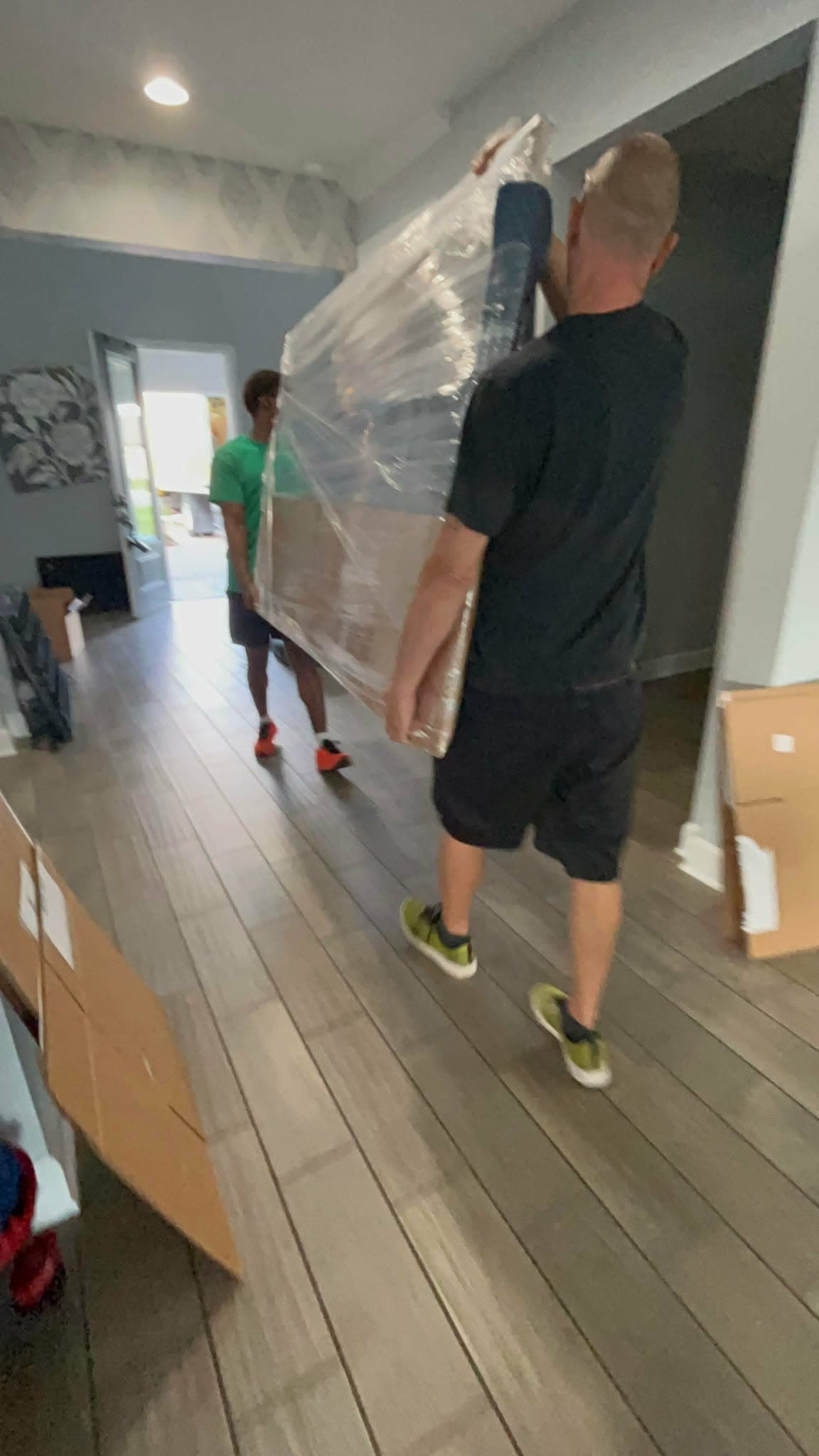
- Furniture protection. Moving blankets, floor runners, shrink wrap, and proper box-truck padding aren't frills — they're what separates a scratch-free move from one that costs you the security deposit on your new place.
- Liability coverage. If something breaks during a DIY move, that's on you. With a licensed, insured apartment moving service, you have actual protection.
Orlando-Specific Moving Tips Most Renters Skip
A few things worth knowing if this is your first Orlando apartment move:
- Avoid I-4 between 7–9 a.m. and 4–7 p.m. The 408/I-4 interchange is consistently one of the worst bottlenecks in the region. A 9 a.m. move-out start that gets caught in the tail end of rush hour can push your schedule back an hour.
- Start early in summer. In June, July, and August, temperatures in the truck and on the pavement start climbing by 10 a.m. A 7:30 or 8 a.m. start gets the heavy lifting done before it gets brutal.
- Plan around afternoon storms. From roughly 2–5 p.m. during Florida summers, Central Florida sees convective thunderstorms with near-daily regularity. Scheduling your truck arrival to finish unloading before 1 p.m. is smart planning, not overcautious.
- Check HOA moving windows. Some communities in Baldwin Park, Dr. Phillips, and Celebration have designated moving hours — typically 8 a.m. to 5 p.m. on weekdays only, or specific weekend windows. Check before you book.
- Electronics need humidity-safe packing. Florida's heat and humidity are rough on unprotected electronics. Plastic bins with tight lids or sealed boxes beat standard cardboard for any move that runs during rainy season.
Conclusion: The Earlier You Start, the Easier It Gets
Apartment moves in Orlando aren't harder than they need to be — they're just unforgiving of last-minute planning. The elevator that isn't reserved, the loading zone that's taken, the box that never got labeled — these are all preventable, and they're all solved by starting earlier than feels necessary.
Thirty days is exactly the right amount of runway. Work through this checklist a week at a time, get your movers booked early, and give yourself the chance to arrive at your new apartment without the feeling that you've forgotten half your life.
When you're ready to book, Liberty Moves Orlando's apartment moving team is available across Central Florida — fully licensed (USDOT 3455436, FLDACS IM3347), insured, and familiar with the buildings, gates, and elevators in every corner of the metro. Request your free quote at libertymovesorlando.com or call (407) 641-2887 — peak weekend dates fill fast, especially in May and August.
Frequently Asked Questions
1. How far in advance should I book apartment movers in Orlando? \
For weekend and end-of-month moves, book at least 3–4 weeks out. May, August, and the last week of any month are the busiest windows — those dates can fill up even earlier. Weekday moves offer more flexibility and sometimes better pricing.
2. Do Orlando apartment buildings require movers to have a Certificate of Insurance (COI)?\
Many do, particularly newer or luxury properties. A COI names the building as an additional insured party and protects them if damage occurs during your move. Liberty Moves Orlando provides building-specific COIs at no charge — just send over your property manager's requirements and we'll get it to them before your move date.
3. How do I reserve a service elevator for my move?\
Contact your building's property management or leasing office directly. Most buildings require 1–2 weeks' notice and charge a small refundable deposit to hold the elevator. Your moving company can help coordinate the timing, but the reservation itself is typically made by the tenant.
4. What should I pack in my essentials bag for moving day?\
Pack anything you'll need in the first 24 hours regardless of what else gets unpacked: phone charger, medications, ID and insurance cards, a change of clothes, toiletries, laptop or tablet, snacks, and any important documents. Keep this bag in your car, not on the truck.
5. Can I move during Orlando's hurricane season?\
Yes — most moves happen without issue. That said, if a named storm is within the 5-day forecast cone, confirm your mover's rescheduling policy in writing before your move date. Liberty Moves Orlando works with customers individually on storm-related reschedules; just ask when you book.
6. How much does it cost to hire apartment movers in Orlando?\
Pricing depends on crew size, move duration, floor level, and distance. Local apartment moves in Orlando typically run 2–5 hours for a 1–2 bedroom. For a detailed breakdown of what goes into move pricing, see the Liberty Moves Orlando moving cost guide.